2025 App Store Awards
Apple today announced 45 finalists for this year’s App Store Awards, recognizing the best apps and games across 12 different categories for creating exceptional experiences that inspire users to accomplish more, reimagine their daily workflows, and push creative boundaries.
Confusingly, this is different from the Apple Design Awards, which happen around WWDC. Many of the best Mac apps are not in the Mac App Store and so aren’t eligible for either list.
I did not enjoy all of them as much as Apple did.
[…]
iPhone app of the year Tiimo bills itself as an “AI Planner & To-do” app that is designed with accommodations for people with ADHD and other neurodivergences. Subscription plans cost $12/month ($144/year) or $54/year ($4.50/month). It does not offer a native Mac app, and at the end of onboarding/account setup, it suggests their web app for use on desktop computers.
[…]
The app seems OK, but not award-worthy to me. But, admittedly, I’m not in the target audience for Tiimo’s ADHD/neurodivergent focus. I don’t need reminders to have coffee in the morning, start work, have dinner, or to watch TV at night, which are all things Tiimo prefilled on my Today schedule after I went through onboarding. As I write this sentence, I’ve been using Tiimo for five minutes, and it’s already prompted me twice to rate it on the App Store. Nope, wait, I just got a third prompt.
[…]
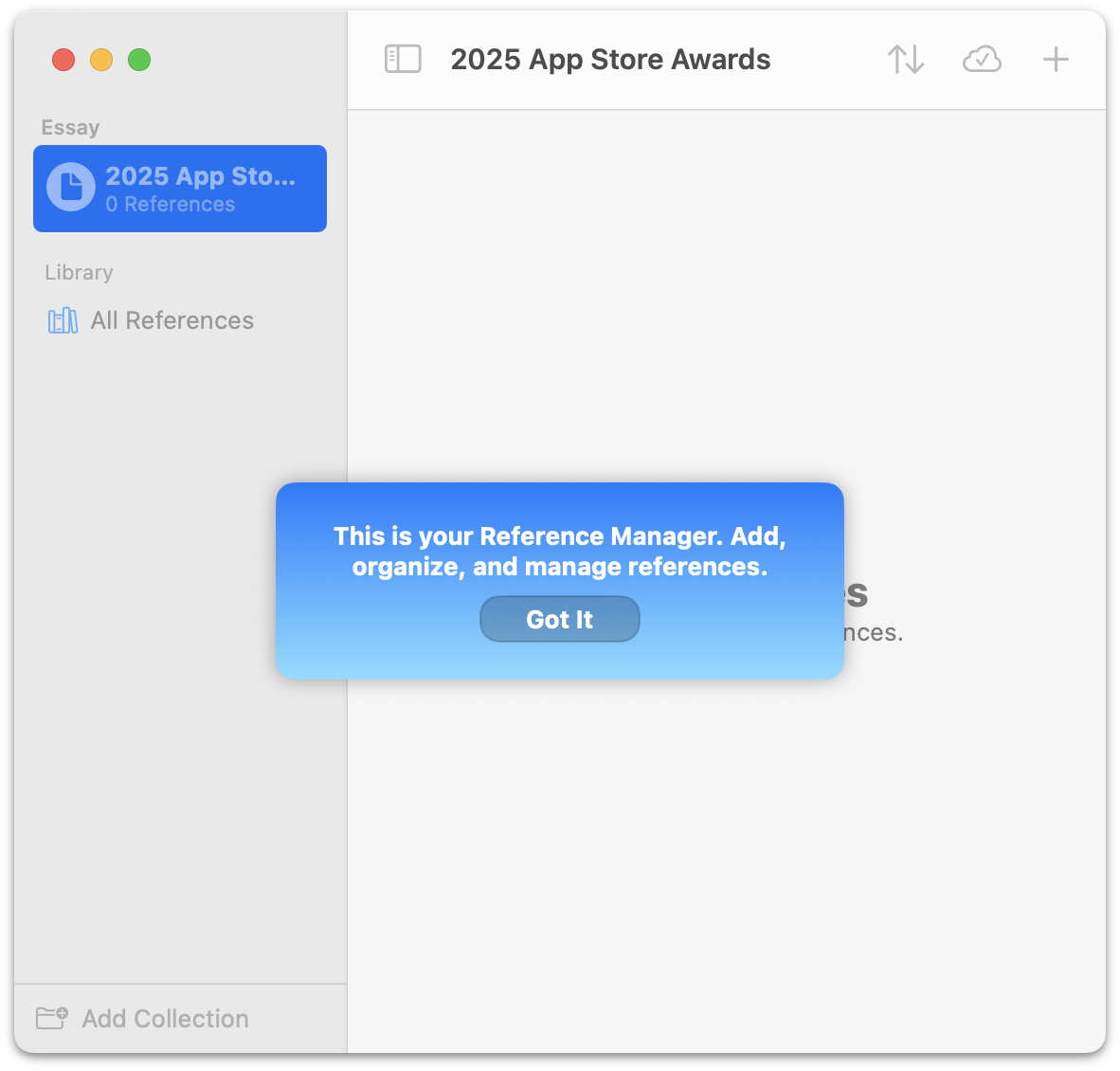
Essayist is a document-based (as opposed to library-based) app, and its custom file format is a package with the adorable file extension “.essay”. The default font for documents is Times New Roman, and the only other option is, of all fonts, Arial — and you need an active subscription to switch the font to Arial.
[…]
The app carries a few whiffs of non-Mac-likeness (e.g. the aforementioned lack of Settings, and some lame-looking custom alerts).
I tuned out the ADAs years ago when Apple kept gushing about how apps that violated all sorts of platform conventions did such a good job of following the human interface guidelines. If you want to see which apps are popular, there are charts for that. These days, I think the awards are mainly useful to see what types of things Apple wants to promote. This year, that included an app with no Mac version and an app that Gruber suspected be Catalyst. Between that and the example Apple’s setting with its own design work, it’s nudging things the wrong direction. It falls to others to set the standard.
Explore a new visual gallery to find how teams of all sizes are taking advantage of the new design and Liquid Glass to create natural, responsive experiences across Apple platforms.
Every single example they show looks worse with Liquid Glass than it did with the previous design language. Poor contrast, distracting translucency — it’s a mess.
Previously:
- Icons in Menus Everywhere
- Alan Dye Leaving Apple for Meta
- John Geleynse Retires From Apple
- Music to No One’s Ears
- 2021 Apple Design Award Finalists
- 2020 Apple Design Awards
- App Store Design Awards
Update (2025-12-12): Matt Sephton:
Also the Liquid Glass gallery doesn’t have any macOS apps.
2 Comments RSS · Twitter · Mastodon
> I tuned out the ADAs years ago when Apple kept gushing about how apps that violated all sorts of platform conventions did such a good job of following the human interface guidelines.
There's also the fact that there's been quite a lot of time where the winners were former Apple's employees or software from companies that Apple purchased software from.
Thanks for the clarification about the App Store awards vs. the Apple Design awards. I didn't realize the distinction until I saw your post - I was wondering why there were awards at this time of year. (Though not wondering too much - like you, I pretty much ignore this sort of blather from Apple.)